
Pros and Cons of Using a Hana Table for Orthopedic Surgeries in Surgery Centers
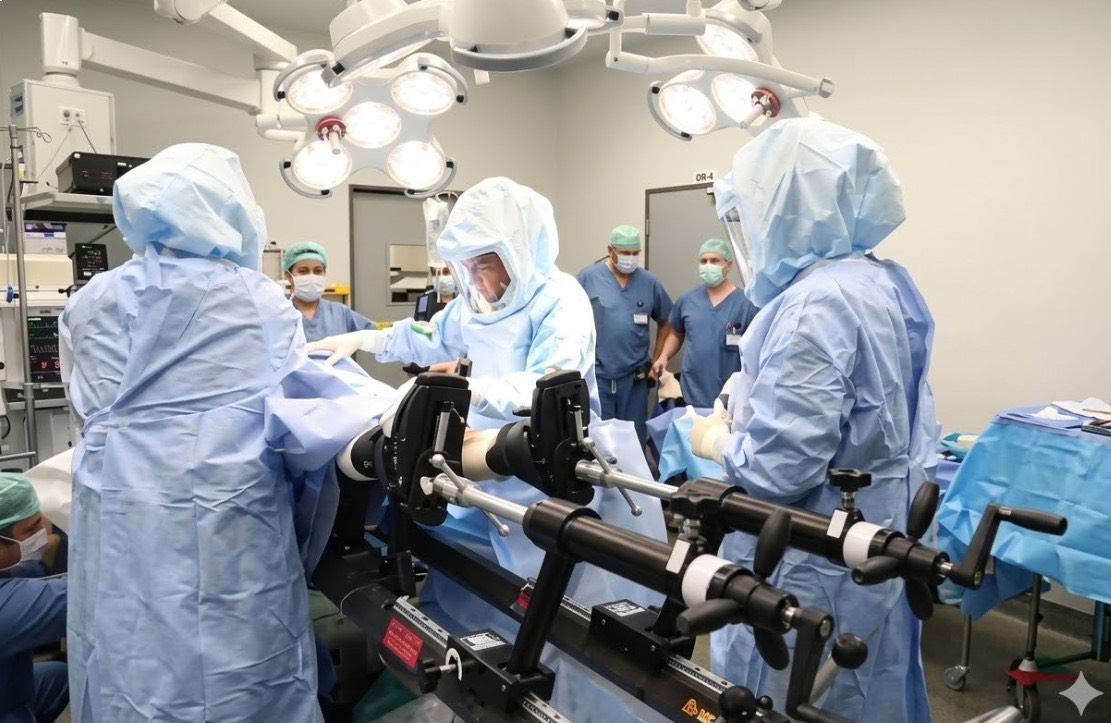
The Hana orthopedic surgery table has become an increasingly popular technology, especially in ambulatory surgery centers. Designed specifically for procedures such as anterior hip replacement and hip arthroscopy, it offers unique positioning capabilities and workflow advantages. However, like any specialized equipment, it also presents certain limitations. Understanding both the benefits and drawbacks is essential for surgery centers considering its adoption.
One of the most significant advantages of the Hana table is its ability to independently position and manipulate the patient’s legs. This feature allows surgeons to achieve precise alignment and optimal exposure of the hip joint, which is difficult to replicate with conventional operating tables. The table enables movements such as hyperextension, rotation, and traction, improving surgical accuracy and implant placement.
Another major benefit is compatibility with the direct anterior approach to hip replacement. This technique avoids cutting major muscles, leading to less tissue damage, reduced postoperative pain, and faster recovery times for patients. Many patients are able to walk within hours or return to normal activities within weeks, which aligns well with the outpatient model of surgery centers.
The Hana table is also radiolucent, meaning it allows unobstructed imaging during surgery. Surgeons can use real-time fluoroscopy to confirm implant positioning and leg length equality, improving surgical precision and outcomes. This feature of the Hana table is valuable in high-volume orthopedic surgery centers where the goal is to maximize both efficiency and accuracy.
Finally, some versions, such as those designed for surgery centers, are built for quick setup and compact storage, helping facilities maximize limited space and increase case throughput. Additionally, features like lift-assist leg spars reduce the physical strain on operating room staff 1–5.
Despite its benefits, the Hana table comes with several drawbacks. The most notable is its high cost, which can exceed $100,000, making it a significant capital investment for smaller surgery centers. In addition to the initial purchase, maintenance and staff training costs can further increase the financial burden.
Another limitation is the learning curve associated with its use. Surgeons and operating room staff must be specifically trained to operate the table effectively. Without adequate experience, setup time may increase, and workflow efficiency may initially decline. Feedback from clinical communities suggests that the table’s complexity and assembly requirements can be challenging in busy operating room environments.
The table also has a relatively large footprint compared to standard surgical tables, which can create space constraints in smaller operating rooms and may require workflow adjustments. In some cases, components must be assembled or removed between procedures, adding time and logistical complexity.
Patient selection can also limit use cases for Hana tables. Not all patients are suitable candidates for orthopedic procedures performed on a Hana table, especially patients with certain body types or medical conditions. As a result, the typical patient demographics of surgery centers may influence whether a Hana table’s use is appropriate 6–8.
The Hana table is a significant innovation in orthopedic surgical technology, offering improved positioning, minimally invasive capabilities, and enhanced recovery outcomes for surgery centers. However, its high cost and complexity are major drawbacks to its adoption.
References
1. Jassal, A., Princesa, C. & Mai, K. The Hana Table Can Be Used for Successful and Safe Closed Reduction of Anterior and Posterior Total Hip Dislocations, Even in Prolonged Dislocation up to 36 Hours. Arthroplast Today 38, 101974 (2026). DOI: 10.1016/j.artd.2026.101974
2. The Hana® Table Can Help with Faster Recovery for Total Hip Replacement Surgery | McLaren Health Care News. https://www.mclaren.org/main/news/the-hana-table-can-help-with-faster-recovery-for-t-4100 (2022).
3. High-tech surgical table is a game-changer for hip surgery | MGH Foundation. https://www.mghf.ca/your-impact/high-tech-surgical-table-game-changer-hip-surgery.
4. The ease of hip replacement surgery with this surgical advancement | News. https://news.llu.edu/health-wellness/ease-hip-replacement-surgery-surgical-advancement (2025).
5. Wharton, D. Clinical Utility of Hana® Orthopedic Table Highlighted in New Study |. Mizuho OSI https://www.mizuhosi.com/clinical-utility-of-hana-orthopedic-table-highlighted-in-new-study-97-of-direct-anterior-approach-hip-replacement-patients-needed-little-to-no-opioid-pain-medication-after-surgery/ (2020).
6. Flierl, M. A., Stahel, P. F., Hak, D. J., Morgan, S. J. & Smith, W. R. Traction table-related complications in orthopaedic surgery. J Am Acad Orthop Surg 18, 668–675 (2010). DOI: 10.5435/00124635-201011000-00004
7. Ramadanov, N. et al. Indirect comparisons of traction table versus standard table in total hip arthroplasty through direct anterior approach: a systematic review and frequentist network meta-analysis. J Orthop Surg Res 19, 384 (2024). DOI: 10.1186/s13018-024-04852-3
8. Attenasio, A. et al. Are complications related to the perineal post on orthopaedic traction tables for surgical fracture fixation more common than we think? A systematic review. Patient Saf Surg 17, 5 (2023). DOI: 10.1186/s13037-023-00355-y